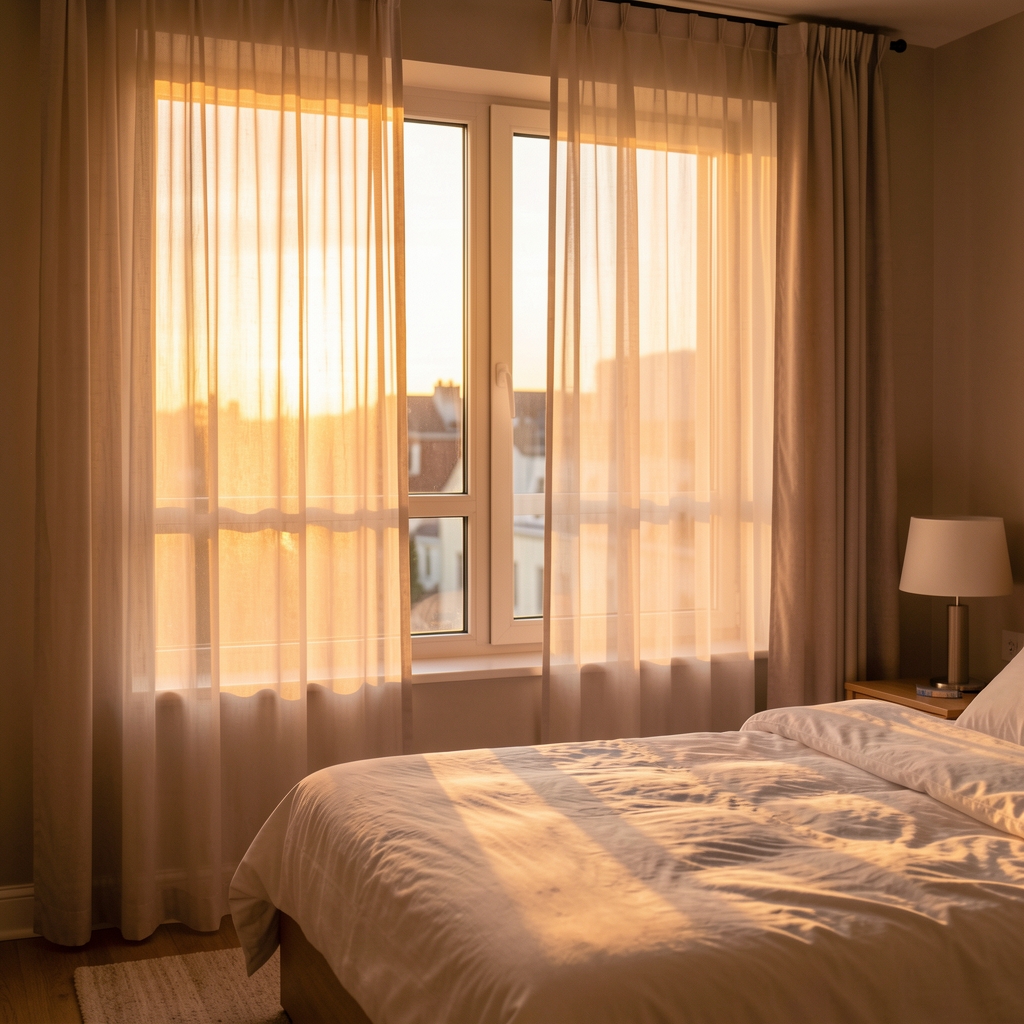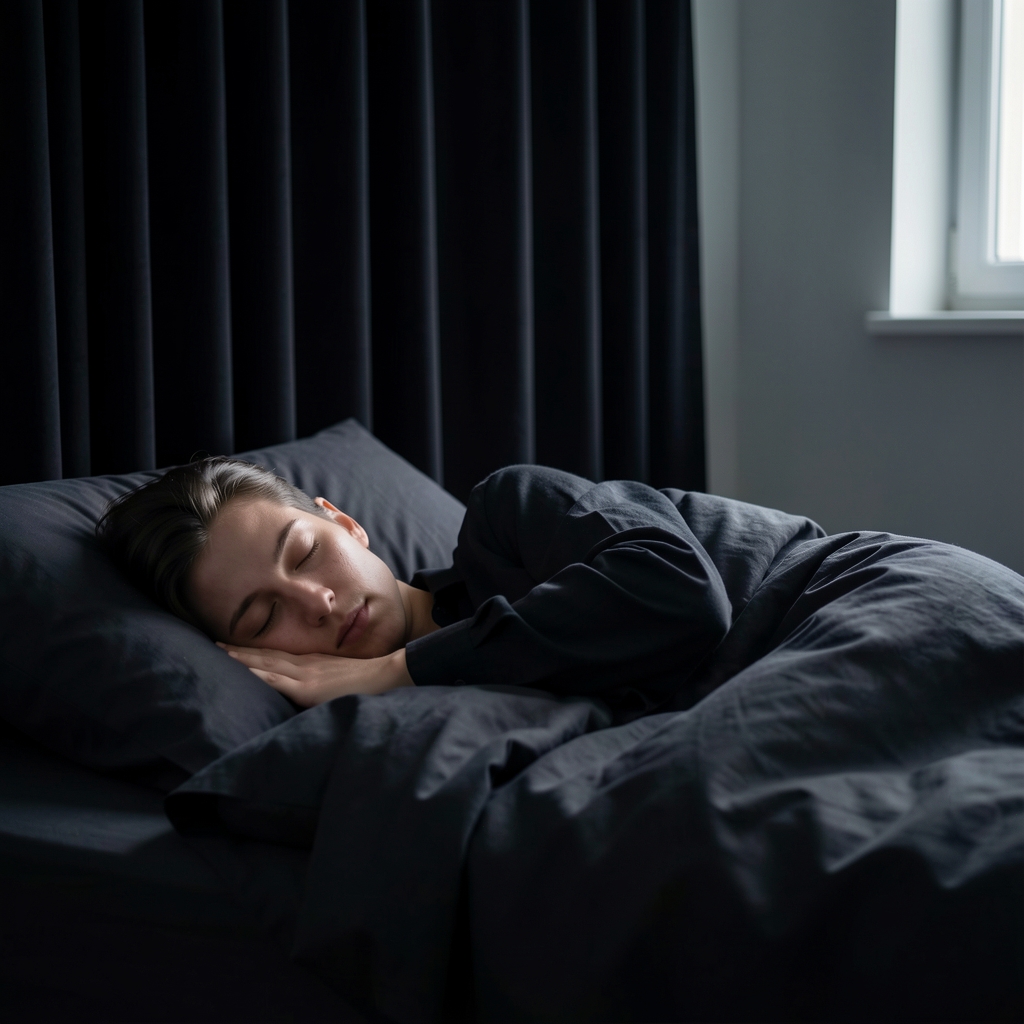
The ninety minutes before a person lies down have an influence on the quality of what follows that is, by most accounts, disproportionate to their length. This is not a novel observation — the pre-sleep interval has been the subject of considerable attention in sleep research over the past two decades — but it remains underrepresented in the way people actually think about and arrange their evenings.
The Wind-Down Window
The body does not transition from full wakefulness to sleep instantaneously. It descends, through a sequence of physiological adjustments, into the conditions that make sleep possible. Core body temperature falls. The production of arousal-associated signals diminishes. The nervous system moves, by degrees, toward the parasympathetic state associated with rest.
This descent begins before the person gets into bed. Its quality — how smoothly it proceeds, how complete it is by the time the person closes their eyes — depends substantially on what happened in the preceding hour or two. A work call at half past ten, a bright overhead light kept on until eleven, a large meal finished at nine-thirty: each of these introduces friction into the transition. The body is asked to descend while still receiving signals that say otherwise.
The wind-down window, as a practical matter, is the period set aside for conditions that support the descent. It is not a fixed ritual so much as a set of constraints: lower light levels, reduced cognitive demand, a stable temperature, and the absence of stimulating inputs. What fills the window is less important than what it excludes.
"The wind-down window is not a fixed ritual so much as a set of constraints."
Light and Its Role in the Evening
Of all the variables that bear on the pre-sleep window, light exposure is probably the most studied and the most consequential in practice. The eye contains specialised cells — the intrinsically photosensitive retinal ganglion cells, or ipRGCs — that are particularly sensitive to short-wavelength light in the blue band of the spectrum. These cells send signals to the suprachiasmatic nucleus, the region of the brain that coordinates the body's timekeeping, and their activation suppresses the evening rise in melatonin that signals to the body that night has arrived.
Modern indoor lighting, and particularly the screens of computers and phones, delivers a substantial dose of blue-band light well into the evening. The result, well-documented across multiple published studies, is a delay in the timing of the melatonin rise — which in turn delays the onset of sleepiness and, where it conflicts with a fixed wake time, compresses the total period of sleep available.
A screen-free evening — or at minimum, the use of warm, low-intensity light after nine in the evening — represents the single adjustment with the most consistent support in the published literature on sleep hygiene practices. It is also, in practice, one of the more difficult habits to establish, given the degree to which evening screen use is normalised in working life. The effort, however, is disproportionately rewarded.
- The pre-sleep interval, typically 60–90 minutes before lying down, has a notable effect on sleep depth.
- Short-wavelength light exposure in the evening delays the body's readiness for sleep.
- A stable, cool room temperature supports the body's natural evening temperature descent.
- Weighted blankets are associated with reduced perceived arousal for some individuals.
- Consistent bedtimes appear more important to sleep quality than the absolute hour chosen.
Temperature and the Bedroom
The decline in core body temperature that accompanies the onset of sleep is not merely a consequence of lying still — it is an active process, driven by the dilation of blood vessels in the skin, which allows heat to dissipate. The body, in other words, is working to cool itself, and it does this more easily in a room that is already cool.
The research on bedroom temperature and sleep quality converges around a range of 16 to 19 degrees Celsius as broadly supportive for most adults, though individual preference varies. What the literature is clearer on is the consequence of heat: a warm room interrupts the temperature descent, prolongs sleep onset, and reduces the time spent in the deeper, more restorative stages.
The use of a weighted blanket is a related consideration. The additional pressure of a weighted blanket appears, for certain individuals, to reduce the perceived sense of arousal at sleep onset — a finding attributed by researchers to the activation of the body's deep pressure receptors. The effect is not universal, and the evidence base, while growing, remains limited compared with the literature on light and temperature. It is, however, a practical adjustment that carries low risk and appears to benefit a meaningful proportion of those who try it.
The Melatonin-Friendly Evening
A melatonin-friendly evening routine is, in effect, an evening arranged to give the body's endogenous timing signals room to operate without interference. This means: dimming lights progressively from around eight in the evening; avoiding bright overhead lighting in the hour before bed; keeping screen use to a minimum or using warm-tinted display settings; finishing any demanding cognitive work — email, budgets, planning — at least an hour before lying down; and maintaining a consistent sleep environment that the body associates reliably with rest.
None of these adjustments is difficult in isolation. The challenge is the cumulative one: building an evening that holds them together, against the pressure of modern life's tendency to fill every available hour. This is a behavioural challenge as much as an informational one. Knowing what supports sleep is not the same as having arranged one's evening so that it happens.
Sleep Hygiene as Environment, Not Ritual
The phrase "sleep hygiene" has accumulated a certain cultural residue — it suggests a checklist, a set of structured actions, a performance of bedtime virtue. This framing is not especially useful. What the evidence actually supports is closer to environmental design: the deliberate arrangement of the physical and behavioural context of the evening so that the body's own processes encounter fewer obstacles.
A sleep tracking journal, maintained over several weeks, is one of the more useful tools for identifying which specific variables matter most for a given individual. Most people have a partial account of their sleep — they know they sleep badly when they have a late coffee, or that a particularly stressful day carries into the night. A structured journal makes the full picture legible. It also, in the act of maintaining it, tends to shift attention toward the evening hours in a way that is itself useful.
The hours before midnight are not a fixed quantity. They vary in length, in how they are spent, and in what precedes them. But they are, in most people's lives, the part of the day most amenable to deliberate adjustment — the window where small changes in habit accumulate into meaningful differences in rest.